What Are High-Altitude Stations (Haps) Explained
1. HAPS occupies a sweet spot between Earth and Space
Do not be confused about the binary of ground towers against orbiting satellites. Platform stations operating at high-altitudes work in the stratosphere. It is typically between 18 and 22 km above sea level. an atmosphere that is at a level that is so steady and secure that an aircraft designed with care can maintain its position with astounding precision. It is high enough to serve enormous geographic footprints using a single vehicle however, it’s close enough Earth the signal latency stays at a minimum and the equipment doesn’t need to face the severe radiation environment that orbits space. This is a truly underexplored region of sky, and the aerospace world is only now beginning to develop it seriously.
2. The Stratosphere Is Calmer Than You’d Expect
One of the most baffling aspects of stratospheric flight how stable the climate is in comparison to the turbulent Troposphere below. The winds at the stratospheric cruising levels are generally gentle and steady that is crucial for station keeping, which is the capacity of a HAPS vehicle to keep a fixed position above the targeted area. For earth observation, telecommunications or other missions, even several kilometres away from its position will affect the quality of coverage. Platforms engineered to guarantee true station keeping, such as the ones developed by Sceye Inc, treat this as a core design principle instead of as an additional consideration.
3. HAPS stands for High-Altitude Platform Station
The acronym itself is worth unpacking. Platform stations with high altitudes are identified under ITU (International Telecommunication Union) frameworks as a facility located on some object at an altitude of 20 to 50 kilometers in a specified, nominal fixed location relative to Earth. “The “station” part is intentional it’s not research balloons floating across continents. They are telecommunications and observation infrastructure, located at a station carrying out persistent missions. Consider them less like aircraft, and more as low-altitude, reuseable satellites with the capability for return, to be serviced or redeployed.
4. There are many different vehicle types under the HAPS Umbrella
Not all HAPS vehicles are the same. The category includes solar-powered fixed-wing aircraft, airships made of lighter than air and tethered balloon systems. Each of them has its own trade-offs regarding payload capacity, endurance, and price. Airships, for instance, are able to carry heavier payloads over longer time periods due to buoyancy doing most of the lifting work and frees up sunlight for propulsion, stationkeeping, in addition to onboard devices. Sceye’s method employs a lighter than air structure specifically designed for airships that maximize payload capacity and mission endurance — a deliberate architectural decision that differentiates it fixed-wing competitors, who are seeking records in altitude using a minimum weight.
5. Power Is the Central Engineering Challenge
To keep a structure in the in the stratosphere to last for months or even weeks without refuelling means solving an energy equation that leaves small margins for error. Solar cells harness energy during daylight hours, but the platform must survive the night without power stored. This is where the battery’s energy density is crucial. New developments in lithium-sulfur cell chemistry — with energy densities that exceed 425 Wh/kg make endurance missions that require a high level of endurance increasingly viable. Paired with improving solar cell efficiency, the final goal is to have a closed power loop by generating and storing enough energy per day to keep the full functionality running for an indefinite period of time.
6. The Footprint of Coverage Is Massive in comparison to Ground Infrastructure
A single high-altitude tower station at 20 km altitude will cover a ground footprint of several hundred kilometres in diameter. A typical mobile tower covers some kilometres at the most. This inequity results in HAPS particularly useful in connecting remote regions or areas that aren’t served where building infrastructure for terrestrial is economically infeasible. A single stratospheric vessel can achieve what would otherwise require hundreds or thousands of ground assets — making it one of the more effective solutions that are being proposed to fill the lingering global connectivity gap.
7. HAPS Carry Multiple Payload Types At the Same Time
Contrary to satellites who are generally locked into a fixed mission profile at start-up, stratospheric platforms carry mixed payloads and be modified between deployments. One vehicle could have an antenna for broadband delivery, as well as sensors for greenhouse gas monitoring and wildfire detection. It could also be used for oil pollution monitoring. This multi-mission flexibility is one of the strongest economic arguments for HAPS expenditure — the same infrastructure could serve connectivity and climate monitoring in tandem instead of having separate assets dedicated for every function.
8. This technology enables Direct-to-Cell and 5G Backhaul Applications
From a telecoms perspective from a telecoms perspective, what could make HAPS unique is its integration with existing ecosystems of devices. Direct-to cell technology lets smartphones to connect, without the need for specialized hardware, and HAPS acts as HIS (High-Altitude IMT Base Station) that’s essentially a cellphone tower in space. It can also act as 5G backhaul, connecting grounded infrastructure to networks. Beamforming technology lets platforms to target signal precisely to where demand exists instead of broadcasting across the board and thereby increasing the spectral efficiency significantly.
9. The Stratosphere is now attracting serious Investment
What was once a niche research field 10 years ago has been able to attract substantial investment from major telecoms companies. SoftBank’s agreement with Sceye in the development of a national HAPS infrastructure in Japan which will offer pre-commercial service in 2026, is one of the biggest commercial investments in stratospheric connectivity to this point. It represents a paradigm shift from HAPS being considered to be an experimental technology to being considered a deployable an infrastructure that can generate revenue- an important validation for the wider market.
10. Sceye Represents a New Model for a Non-Terrestrial Infrastructure
Sceye was founded by Mikkel Vestergaard with headquarters in New Mexico, Sceye has set itself up as a longer-term player within what is genuinely frontier aerospace territory. Sceye’s emphasis on combining endurance, payload capabilities, as well as multi-mission capability, is an indication of an assumption that stratospheric platforms will eventually become a durable layer of global infrastructure and not just a novelty or gap-filler, but a true third-tier that sits between terrestrial networks alongside orbital satellites. For connectivity, climate observations, and disaster management, high-altitude platform stations are starting to look less like a dream and more like a natural component of how humanity manages and connects its planet. View the most popular sceye greenhouse gas monitoring for website advice including Sceye Founder, sceye haps airship status 2025 2026 softbank, high-altitude platform stations definition and characteristics, Sustainable aerospace innovation, Beamforming in telecommunications, sceye haps airship payload capacity, investment in future tecnologies, sceye haps softbank, Diurnal flight explained, softbank sceye haps japan 2026 and more.
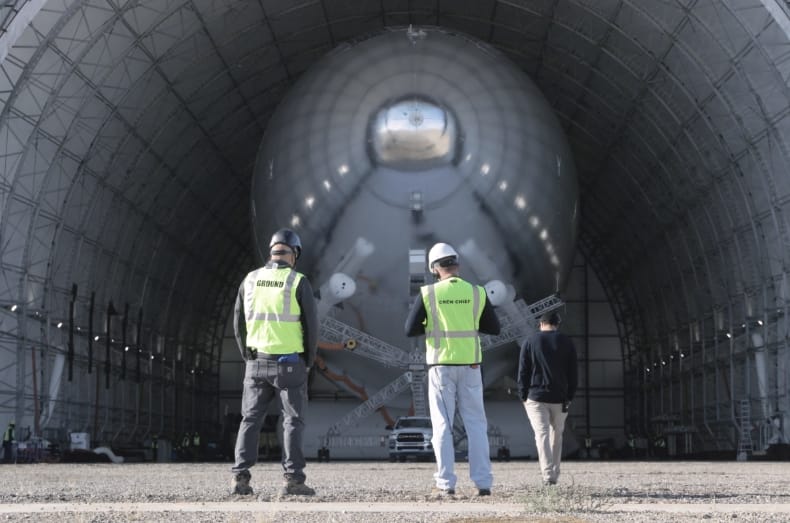
SoftBank’S Haps Pre-Commercial Services: What’s Coming In 2026?
1. Pre-Commercial is a Specific and Meaningful Milestone
The term “terms of service” is essential here. Precommercial services have a distinct phase in the creation of any new communication infrastructure — beyond experimental demonstrations, beyond proof-ofconcept flight campaigns, and finally into the areas where real users enjoy actual service under conditions which correspond to what a full commercial deployment might be. It is a sign that the system is maintaining its position reliably, the signal is meeting quality standards that applications actually rely on and the ground infrastructure communicates with the spheric telecom antenna effectively, and the necessary regulatory authorizations are in place to operate over populated areas. It is not a marketing milestone. It’s an operational goal, in addition, the very fact SoftBank has committed publicly to being able to achieve it the country of Japan in 2026 sets an example that engineers on both sides of the partnership must the ability to clear.
2. Japan Is the Right Country for this First
Picking Japan as a location for high-end pre-commercial services doesn’t come from a lack of consideration. The country has a number of characteristics that make it perfect as a possible first deployment setting. The country’s geography — mountains, terrain with thousands of inhabited islands in the ocean, and long and complex coastlines -pose genuine difficulties in covering that stratospheric structure has been designed to overcome. Its regulatory environment is sophisticated enough to handle the airspace and spectrum issues of stratospheric activity. The existing mobile network infrastructure, which is operated by SoftBank gives it the integration layer that the HAPS platform requires to connect to. And the population is equipped with the device ecosystem as well as the digital literacy needed to utilize stratospheric broadband services without requiring an adoption period which could slow meaningful uptake.
3. Expect the Initial Coverage to Focus On Underserved Areas and Strategically Important Areas
Pre-commercial deployments aren’t designed to blanket the entire world at once. The more likely approach is an individualized rollout that targets areas in which the difference between the current coverage and the benefits that stratospheric connectivity will bring is greatest, and where the strategic reason for priority coverage is the strongest. In Japan’s context, this is the case for island communities that are currently dependent on expensive and limited broadband satellites, mountainsides areas of rural where the economics of terrestrial networks have never provided adequate infrastructure the coastal zone where resilience to disasters is a top national concern due to the vulnerability of Japan to earthquakes and typhoons. These areas provide the most precise evidence of stratospheric connectivity’s advantages and useful operational data for refining coverage, capacity and platform management before broader rollout.
4. Its HIBS Standard Is What Makes Device Compatibility Possible
One of the most common questions that anyone is likely to ask about stratospheric broadband would be whether they require special receivers or operates with standard devices. Its HIBS Framework — High-Altitude IMT Base Station -provides a standards-based answer to this question. Through its conformance to IMT standards that underpin 5G and 4G networks worldwide, the stratospheric platform that functions as a high-speed base station is compatible with the smartphone and device ecosystem already available in the coverage area. For SoftBank’s services that are pre-commercial, this means subscribers in these areas should be capable to access stratospheric connectivity through their devices, without the need for additional hardware, which is a crucial requirement for any product that strives to reach the majority of people who live in remote areas who require alternative connectivity options, and are not in the best position to invest in equipment that is specialized.
5. Beamforming will determine how well Capacity Is Dispersed
A stratospheric system that covers an area of vast size doesn’t automatically have a common capacity for use across the whole area. The way in which spectrum and energy available to signal is distributed across the coverage area is an issue of beamforming capacity — the platform’s capacity to direct the signal towards regions where demand and customers are concentrated, not broadcasting uniformly across geography that includes large areas of uninhabited. for SoftBank’s early commercialization phase, demonstrating that beamforming using an spheric telecom antenna is able to supply commercially sufficient capacity cities with large coverage area will be the same as proving coverage area. A large footprint that is thin and non-usable capacity has little value. Targeted delivery of genuinely acceptable broadband to defined service areas is evidence of the commercial model.
6. 5G Backhaul Application may Precede Direct-to-Device Services
In some scenarios, one of the earliest and most simple ways to confirm the effectiveness of stratospheric connectivity doesn’t involve direct-to-consumer connectivity but 5G backhaul, which connects existing ground infrastructure in areas in which terrestrial backhaul is not sufficient or non-existent. A remote community might have some equipment on the ground but it’s not equipped with the high-capacity link to the larger network that makes it valuable. A stratospheric-based platform with that backhaul link will provide 5G coverage to communities served by existing ground devices without the need for end users to interface via the stratospheric system in a direct manner. This is a simpler use case to test technically, produces evident and quantifiable results, and builds operational confidence in platform performance prior to the more intricate direct-to-device-service layer is included.
7. In 2025, Sceye’s performance on the platform Sets the Stage for 2026.
The timing of the first commercial services planned for 2026 is entirely dependent on the level of performance it is that the Sceye HAPS airship achieves operationally in 2025. Tests for station-keeping validity, payload performance under actual atmospheric conditions, energy system behaviour across multiple diurnal cycles, as well as the integration testing required to confirm that the platform functions correctly with SoftBank’s networks require adequate maturity prior to the start of commercial services. Updates on Sceye HAPS airship status from 2025, therefore, aren’t just informational items, they are the primary indicators of when the deadline of 2026 will begin tracking according to plan or whether it is accruing the type amount of technological debt which pushes commercial timelines beyond their limits. The technological progress that will be made in 2025 is a story about 2026 that’s being constructed in advance.
8. Disaster Resilience is tested, not just a Claim One
Japan’s disaster exposure means that any commercial stratospheric system operating in Japan will surely encounter a variety of conditions — such as earthquakes, typhoons and disruption to infrastructure make the platform more resilient and its importance as an emergency communication infrastructure. It is not a problem of the deployment. It is a single of its best features. A stratospheric infrastructure that can maintain a station, and maintains the ability to connect and observe during a significant weather or seismic event in Japan proves something that not even a small amount of controlled testing could replicate. The SoftBank Pre-commercial phase will create real-world evidence about how stratospheric infrastructure performs when terrestrial networks are damaged and provide the exact evidence of other potential providers in regions that are prone to natural disasters will need study before they commit to their own deployments.
9. The Wider HAPS Investment Landscape will react to what happens in Japan
The HAPS area has attracted significant investments from SoftBank and other companies, however the overall telecoms and infrastructure investment community is still in the midst of a watchful brief. Large institutions, national telecoms service providers from other countries and governments who are evaluating the an infrastructure that is stratospheric for their coverage and monitoring needs are all following what happens in Japan with a lot of attention. Successful pre-commercial deployments -platforms on station with services operational, or performance metrics that meet thresholdsthat will help accelerate investment decisions across the sector in ways that regular demonstration flights and announcements of partnerships cannot. However, serious delays or performance problems will cause the recalibration of timelines across the sector. The Japan deployment is a significant factor for the whole stratospheric connectivity sector, not only the Sceye SoftBank partnership specifically.
10. 2026 Will Tell Us Whether Stratospheric Connectivity has crossed the Line
There’s a line that runs through the development of any technology that transforms infrastructure between the stage where it’s a promising technology and the point at which it’s a real. Mobile networks, and internet infrastructure all crossed that border at precise times -not when technologies were first tested or demonstrated, but at the point when it was operational enough to be reliable to have institutions and citizens making plans around its existence, rather than focusing on its possibilities. SoftBank’s initial commercial HAPS solutions in Japan offer the best potential candidate in the near term for at which stratospheric connectivity will cross that line. Whether the platforms hold station through Japanese winters, whether the beamforming can provide enough capacity for island communities, and how this service works in the types of conditions Japan typically encounters, will determine whether 2026 will be known as the year that the stratospheric internet became a real infrastructure, or the year the timeline was reset again. See the most popular japan nation-wide network of softbank corp for more info including sceye disaster detection, sceye connectivity solutions, softbank sceye partnership haps, Sceye News, sceye haps project updates, SoftBank investments, SoftBank investments, aerospace companies in new mexico, Sceye News, sceye disaster detection and more.